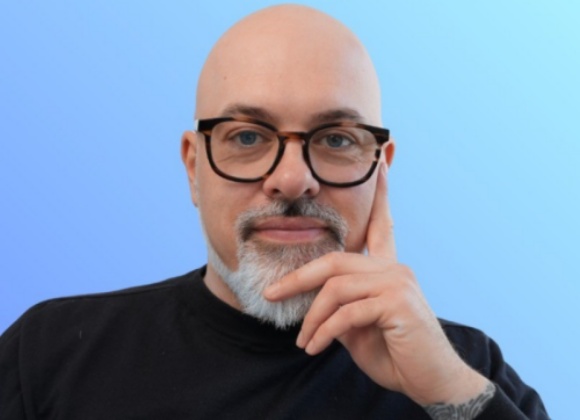
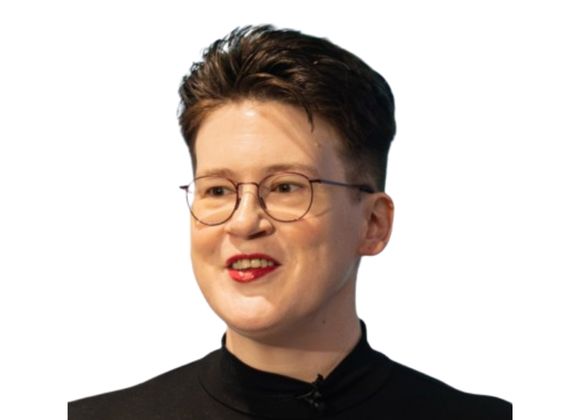
In this episode, Christopher "CRob" Robinson, CTO of OpenSSF, Akrites and Chief Security Architect of the Linux Foundation, explores the state of software supply chain security amid multiple security incidents and explains how tools like Scorecard, the Security Baseline framework, and SLSA help harden software.
The conversation also delves into the impact of global cybersecurity regulations like the EU Cyber Resilience Act (CRA), digital sovereignty, and the role of AI in software engineering. Chris shares insights on OpenSSF's Cyber Reasoning System, practical guardrails for AI-assisted development, and how open-source projects are adapting AI contribution policies.
Key Takeaways
- Frameworks like OpenSSF’s Security Baseline translate compliance mandates (EU CRA, NIST SSDF) into 41 practical, verifiable controls for maintainers and enterprise consumers alike.
- SLSA (Supply Chain Levels for Software Artefacts) complements Security Baseline by hardening development infrastructure, CI/CD pipelines, and source repositories across maturity levels.
- The EU Cyber Resilience Act (CRA) is setting a global benchmark for consumer-focused software security regulation, encouraging international harmonisation across regions like the UK, India, Japan, and Australia.
- AI tools accelerate software creation but require structured harnesses, such as OpenSSF's Cyber Reasoning System and upcoming security skills, to enforce established software engineering discipline.
- Open-source software and local-first data paradigms are essential for digital sovereignty, enabling organisations to retain data control and avoid vendor lock-in.
Subscribe on:
Transcript
Olimpiu Pop: Hello, everybody. I'm Olimpiu Pop, an InfoQ editor, and I have with me Christopher Robinson, who goes by CRob these days. I'll let him introduce himself and share a bit more background.
Christopher Robinson: Hello, everybody. Thank you for having me today. My name is Chris Robinson, also known as CRob. I am the CTO and Chief Security Architect for a couple of Linux Foundation projects. First, the Open Source Security Foundation (OpenSSF), which focuses on application security, supply chain security, and AI security—predominantly helping support upstream maintainers. My other role is leading a new project called Akrites, which is an upstream open-source coordinated incident response team.
Olimpiu Pop: That sounds like a lot! You wear multiple hats, as people often see in your presentations.
Christopher Robinson: Yes. Yes.
OpenSSF’s Tooling and Intended Audience [01:32]
Olimpiu Pop: OpenSSF is definitely a stronghold for security. Before the recent surge in AI, there was a strong push to move security to the left—getting tools and practices closer to development teams. Historically, security was often left for the end alongside documentation and other crucial tasks.
In my experience, whenever something bad happened, the security architect had to scramble down, fix it, and then try to convince developers to adopt the fix. As we record this in early November, we've seen widespread scrambling over PyPI incidents and others, as security incidents continue to rise. We saw an example with PHP where maintainers noted they never expected all four conditions to occur simultaneously—yet they did, with AI contributing to that complexity.
Christopher Robinson: Yes, helping.
Olimpiu Pop: Exactly. When and who should turn to OpenSSF? Who is your target audience?
Christopher Robinson: We focus on two primary personas. First is the upstream open-source developer and maintainer. We provide comprehensive guidance, best practices, tooling, and training to teach software engineers the expected security controls and practices needed to harden their projects and infrastructure. That is our primary audience.
Secondarily, we care deeply about everyone consuming those projects. Sometimes that is another open-source maintainer integrating a project as a dependency, but predominantly it includes downstream manufacturers and enterprises—such as banks, hospitals, and retailers—running their core operations. We offer tools and guidance to help these consumers evaluate and understand the security posture of projects they plan to integrate, such as Scorecard, which we discussed earlier.
Scorecard serves a dual purpose. It helps upstream maintainers choose the right dependencies, and for maintainers looking to demonstrate their security rigor, it acts as a strong public signal showing adherence to security best practices. Consumers can then look for these signals to inform their decisions.
When evaluating two packages for integration into a solution, consumers can select the option with the stronger security posture.
Olimpiu Pop: That aligns with what we discussed regarding Scorecard examining more than just technical aspects. Many recent issues stems from social engineering or oversight—such as typosquatting or version manipulation in the Python ecosystem, where picking the highest available version bypassed protections.
This focus is especially critical now. While recent incidents draw attention, this shift has been building since the pandemic. During that period, many developers focused heavily on building projects, but subsequent industry reports highlight a different trend.
Security Baseline and SLSA Supply Chain Specification [05:26]
For instance, Sonatype reports showed a decline in open-source project maintenance, opening doors for attack vectors. Aside from Scorecard, what other tool would you highlight? OpenSSF excels at making best practices actionable. Knowing what is good is one thing; operationalizing it is the real challenge. What other tool would you single out?
Christopher Robinson: I'm going to cheat and I'm going to say two.
Olimpiu Pop: Excellent. Great.
Christopher Robinson: First, I would highlight our Security Baseline, which represents the next evolution of Scorecard. The Baseline includes 41 recommended security controls and practices. We analyzed global regulations like the EU Cyber Resilience Act (CRA) and frameworks like the NIST Secure Software Development Framework (SSDF) to curate a practical list of actions for project maintainers and consumers.
It combines technical configurations—such as enabling branch protection settings on source code repositories—with organizational controls, like publishing a clear security policy or documenting contributor onboarding and maintainer progression paths.
The Security Baseline is structured across three maturity levels. Level 1 is the most straightforward, roughly equivalent to a mid-range Scorecard score, and takes an experienced developer about two hours to implement. It focuses heavily on documentation. While non-profit open-source maintainers are generally not legally bound by cybersecurity regulations like the EU CRA, downstream manufacturers and governments care immensely about compliance.
The EU CRA explicitly exempts open-source maintainers who do not profit from their work. However, commercial consumers must comply. The Security Baseline translates complex regulatory requirements—from the EU CRA, US Executive Orders, and Japanese legislation—into accessible, practical steps for maintainers without requiring them to digest raw legal texts.
By offering a tiered implementation aligned with modern security practices, the Security Baseline makes projects more attractive to downstream consumers. This increased visibility helps attract more contributors, users, feature requests, and code reviews to strengthen the project.
The second framework I recommend is SLSA (Supply Chain Levels for Software Artifacts), which addresses supply chain provenance, pedigree, and integrity. While Scorecard and Security Baseline focus on code and process quality, SLSA secures the underlying infrastructure—including IDEs, developer workstations, source repositories, CI/CD pipelines, and distribution systems.
SLSA defines progressive levels of maturity to harden development infrastructure. By pairing process-oriented frameworks like Scorecard or Security Baseline with SLSA, organizations can verify how software moves securely through the supply chain and assess infrastructure resilience.
OpenSSF’s Cyber Reasoning System [10:03]
Olimpiu Pop: You mentioned OpenSSF's work around AI. Previously, we expected software development to rely on human engineering skills built over decades. Now, there is a shift toward AI prompting and engineering assistance. How difficult is it to integrate these security frameworks into AI development harnesses?
How is it is to include all this tooling into harnesses because now all our experience transformed itself into harnesses.
Christopher Robinson: It is a fascinating space. LLMs and AI agents have invited a vast group of new stakeholders into software development. Someone with minimal formal software engineering background can now generate code using straightforward prompts. The key is ensuring these workflows incorporate proper security guardrails and harnesses.
While experienced engineers can leverage trained harnesses and best practices, the challenge lies in the influx of new non-developer contributors across accounting, marketing, and operational roles writing code. With frontier LLMs, there is immense excitement to adopt these powerful tools immediately.
In the rush to adopt AI capabilities, teams risk overlooking 50 years of established software engineering discipline and security practices. AI makes it easy to bypass those foundational controls if guardrails are not explicitly built in.
That has been OpenSSF's main focus this year. We brought in a dedicated AI Security Architect to lead the deployment of the Open Source Software Cyber Reasoning System. This framework acts as a modular harness where developers can plug in AI models, fine-tune their operation, and apply specific security skills and domain context.
Looking ahead, our goal is to build modular skills that integrate directly into these AI harnesses. Next year, we plan to release dedicated skills for Scorecard, SLSA, and Security Insights. These tools will enable automated agents to enforce proven security practices during code generation, ensuring more secure software outputs.
Olimpiu Pop: That is great to hear. Recently, when setting up a repository, I had to manually break down Scorecard recommendations and configure them step by step. With my engineering background, I knew how to implement them, but non-technical users focusing purely on product vision need automated triggers to enforce those standards seamlessly.
And those people don't know what's to be expected. And then it's easier for them if something just triggers that point.
Christopher Robinson: In the hands of an experienced senior engineer, LLMs can be transformative—boosting productivity and reinforcing guardrails. However, developers must actively configure and enable those security skills. I am cautiously optimistic, though real challenges remain.
Olimpiu Pop: I see strong enthusiasm at both ends of the spectrum. Senior engineers can move faster without being blocked, while non-engineering teams can build tools independently without navigating traditional engineering bottlenecks.
Is the EU’s CRA a Blueprint for the Rest of the World? [15:03]
You also brought up a major regulatory acronym in Europe: the EU Cyber Resilience Act (CRA).
Christopher Robinson: Yes, absolutely.
Olimpiu Pop: There is a common saying that Europe excels at regulation—as seen with GDPR, the AI Act, and now the CRA. At a recent panel you participated in, speakers discussed digital sovereignty alongside ecosystem fragmentation. In open source, we think globally, but regulations like the US Executive Orders and memory-safe language mandates introduced regional variations. What is your global outlook on cybersecurity regulation right now?
And in the open source ecosystem, we are talking about the global world, a global village. If we take a step upwards, because you're obviously looking at the whole global ecosystem, CRA is getting into force slowly, starting from this autumn. It has multiple stages. Then the US used to have at some point some executive order that started everything in terms of hardening software. And then from that point on, we discussed about memory save programming languages.
I know that Australia invests a lot of money. As you mentioned, you have an agenda for this year and for next year. Maybe you can give us a summary, where is the world from the perspective of the cybersecurity?
Christopher Robinson: Having spent decades as a practitioner starting in the heavily regulated banking sector, I appreciate the value of clear compliance frameworks. That perspective made me eager to see the EU CRA take shape.
While regulation brings implementation challenges, the CRA focuses on necessary, long-overdue principles. Like GDPR's emphasis on citizen data protection, the CRA prioritizes consumer protection against software vulnerabilities and unsafe products, which is a commendable objective.
Global jurisdictions are watching the EU CRA closely ahead of its full enforcement date on December 11, 2027. Countries including the UK, India, Japan, and Australia are observing the rollout as they draft their own cybersecurity approaches.
I anticipate other regions introducing CRA-aligned legislation in the coming years. As a practitioner who prefers efficiency over rework, my hope is that international bodies harmonize their standards rather than creating fragmented, conflicting regulatory requirements.
Fragmented rules would create significant friction. For instance, if Europe adopts established standards for Software Bills of Materials (SBOMs) while another region mandates a proprietary 86-point criteria list, manufacturers and developers will face conflicting compliance burdens that hinder efficient delivery.
My goal is to see global regulatory efforts align with the core principles of the CRA—whether through formal legislation or executive frameworks—to maintain consistent expectations for developers worldwide.
Olimpiu Pop: That is a crucial point. A key strength of the CRA was the collaboration between regulators and industry leaders to reach consensus. The remaining question centers on implementation and ensuring fair execution across organizations of all sizes.
Recent high-profile security incidents have increased public and corporate awareness of cybersecurity risks. Beyond standard threats, the global context involves active cyber warfare, making robust software defense essential. Hopefully, regulatory and industry efforts continue moving in the right direction.
Christopher Robinson: To tie this back to digital sovereignty: open-source software provides the most reliable foundation for organizations to maintain autonomy and avoid vendor lock-in. Open source allows teams to inspect, fork, modify, and contribute code back to the community, rather than depending on a single commercial vendor.
This flexibility allows organizations to combine best-of-breed tools—such as pairing an open-weight LLM with European cloud hosting, US-developed web servers, or global components—while retaining full transparency and control over their technology stack.
Users are More Aware About Digital Sovereignty [22:04]
Olimpiu Pop: This aligns with the local-first software movement. Just as European regulation emphasizes user rights, local-first architecture prioritizes data ownership—ensuring users retain control over their data locally rather than relying entirely on centralized cloud providers.
Instead of receiving an unusable data export when a cloud service shuts down, local-first applications keep data accessible to the user long-term. Combining strong privacy regulations with local-first technical paradigms is a vital step forward for software design.
Christopher Robinson: Agreed.
Olimpiu Pop: Regardless of preference, AI tools are now a permanent part of the software landscape.
Christopher Robinson: They are certainly here to stay.
Olimpiu Pop: Some express concern that automated tools will diminish the human role in software creation. Where do you stand on this spectrum—are you optimistic, pessimistic, or somewhere in between?
Christopher Robinson: I consider myself an AI realist and use these tools daily in my work. AI acts as a helpful assistant that accelerates workflows, rather than a replacement for human engineering judgment. Like a fuzzer or a multimeter in electronics, AI is a tool, and the outcomes depend on how effectively it is applied.
It is important to understand what LLMs actually do: they perform statistical predictions based on context rather than reasoning magic, and they can produce incorrect outputs. Their primary strength lies in identifying patterns across vast datasets—a task where human processing is slower.
When applied thoughtfully, AI provides substantial benefits. However, using these tools without understanding underlying security principles risks exposing sensitive personal or corporate data to external models.
As an AI realist, my goal is to help developers maximize the advantages of AI while remaining aware of potential security risks.
Olimpiu Pop: Given the central role of AI in open source, communities are actively debating AI contribution policies. Some projects require strict human authorship, while leaders like Linus Torvalds view AI as another tool to be used with proper oversight. How do you view recommended AI contribution policies for open-source projects?
Use it cautiously, but you have to understand what's there. And so on, so forth. What's your perspective? How do you see the AI policy of ... I don't know, recommend it maybe?
Christopher Robinson: Policies cross open source remain varied. Maintainers face influxes of automated vulnerability reports and AI-generated contributions, leading to different approaches. While projects like the Linux kernel permit AI-assisted code contributions under developer review, smaller projects with fewer review resources may take a more restrictive stance.
AI usage in software development will continue to grow. The priority for open-source projects is to establish clear, explicit contribution guidelines defining their stance on AI tools. Transparent policies allow contributors to choose projects that align with their preferred workflows.
Olimpiu Pop: Thank you for sharing your insights today, Chris. It was a pleasure speaking with you.
Christopher Robinson: Thank you very much for having me. It was great talking with you.
Mentioned:
- Open Source Security Foundation (OpenSSF)
- Akrites (Upstream Open Source Coordinated Incident Response Team)
- OpenSSF Scorecard
- OpenSSF Security Baseline
- SLSA (Supply Chain Levels for Software Artifacts)
- EU Cyber Resilience Act (CRA)
- NIST Secure Software Development Framework (SSDF)
- OpenSSF Cyber Reasoning System